The Complete Guide to Choosing Roman Blinds for Your Home
By Amanda Stewart, Lahood Showroom Manager

By Amanda Stewart, Lahood Showroom Manager
Amanda Stewart, Showroom Manager, Lahood Window Furnishings
With more than 20 years' experience in the textile industry and over a decade helping Auckland homeowners choose the right window furnishings, Amanda Stewart shares her expert advice on selecting Roman blinds that are both beautiful and practical.
Roman blinds are one of the most versatile window furnishings available. They combine the softness and fabric choice of curtains with the neat, space-saving profile of a blind, making them suitable for everything from compact kitchen windows to large feature windows.
Available in a range of finishing styles and almost any curtain fabric, Roman blinds can be fitted inside or outside the window recess, operated manually or by motor, and customised with different linings to suit the level of light control and privacy you need. This guide explains the key decisions to help you choose the right Roman blinds for your home.
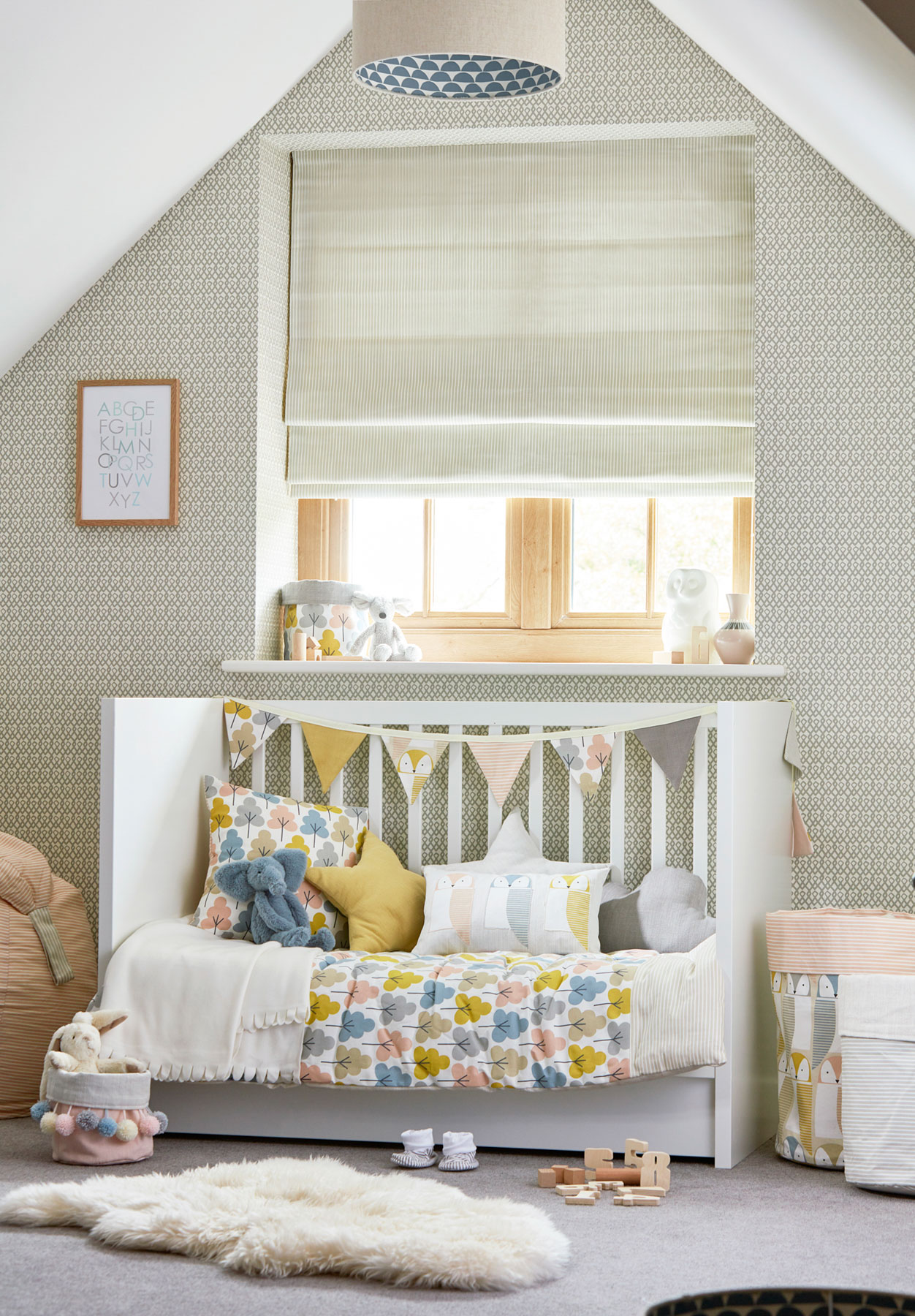
Roman blinds are a popular choice for homeowners who want the softness and elegance of fabric with the clean, practical lines of a blind. Their versatility is one of their greatest strengths as they can be tailored to suit almost any room, interior style or window size.
Unlike curtains, Roman blinds fold neatly into horizontal pleats when raised, making them an excellent choice where space is limited. They work beautifully in kitchens, bathrooms, studies, hallways and bedrooms, while also creating a sophisticated statement across larger living areas.
“Roman blinds are incredibly versatile,” says Amanda Stewart, Showroom Manager at Lahood. “Because they’re made using the same fabrics available for curtains, customers have a huge range of colours, textures and patterns to choose from. This means they can create a look that is soft and decorative, or simple and understated, depending on the style of their home.”
Roman blinds can also be a smart design choice from a budget perspective. As they use less fabric than curtains, homeowners can often choose a premium fabric or designer finish while keeping the overall investment more manageable.
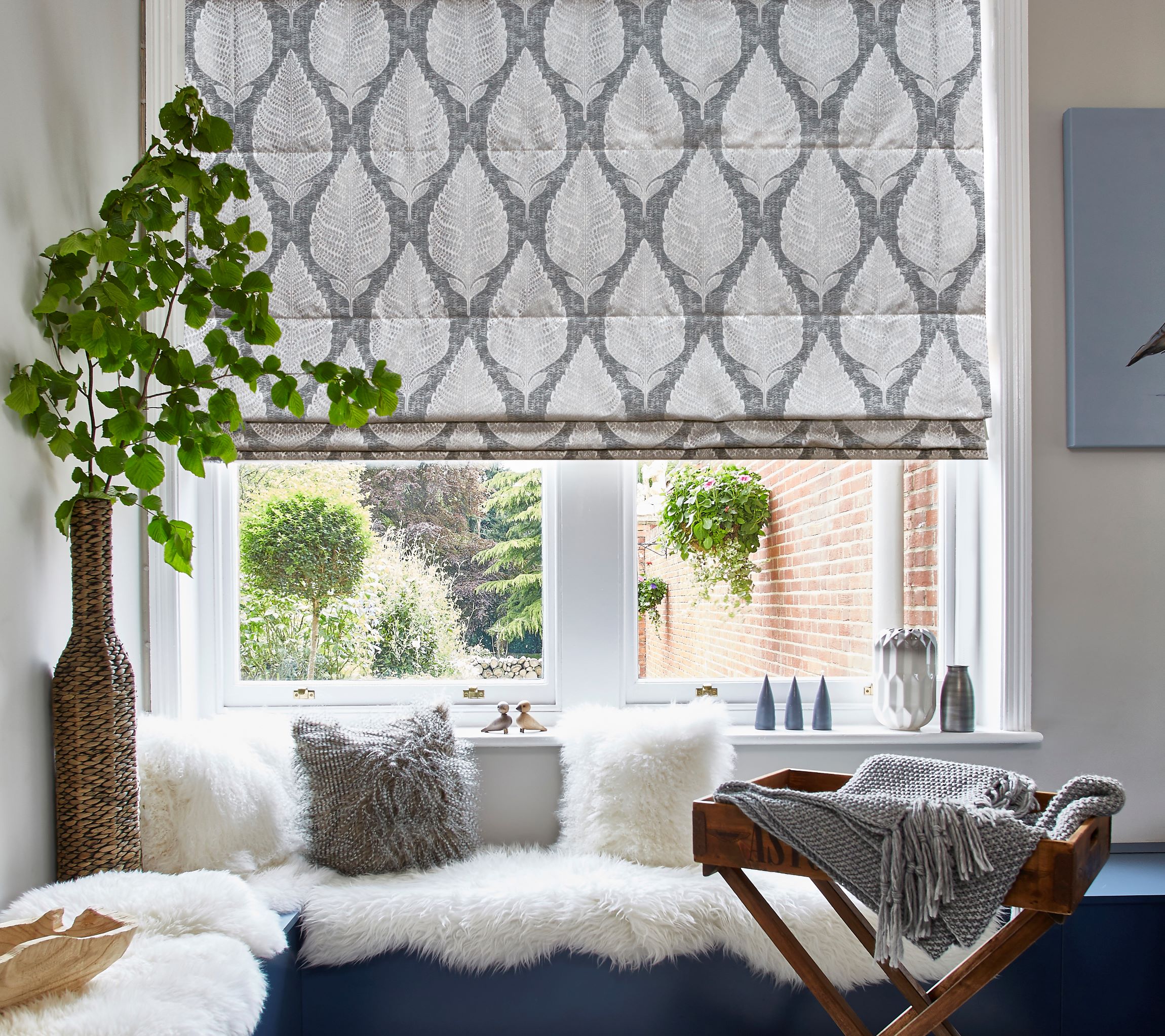
One of the biggest advantages of Roman blinds is their flexibility. Almost any curtain fabric can be transformed into a Roman blind, giving you access to the same beautiful textures, weaves and colours used for curtains.
Lahood's Lifestyle Range offers a great starting point with a wide range of affordable textures and neutral, contemporary shades, while the New Zealand and International Design House collections provide an extensive selection of premium fabrics with a vast array of patterns, colours and textures to suit every style of home.
Because Roman blinds cover only the window itself, they use considerably less fabric than curtains. This often allows homeowners to choose a higher-quality fabric without significantly increasing the budget.
They're also an opportunity to be more adventurous with colour and pattern. A bold print, textured weave or striking stripe can become a feature without overwhelming the room, thanks to the relatively compact amount of fabric on display.
Seeing fabrics in person remains the best way to appreciate their true colour, texture and scale. Lahood's Mt Eden Road showroom showcases one of Auckland's largest collections of curtain and blind fabrics, making it easy to compare options and find the right fit for your home. Alternatively explore all the ranges online .


Yes absolutely roman blinds can be lined. The right type of lining depends largely on how you use the room.
For bedrooms, Lahood recommends Armourguard blockout lining from the Protection Plus range , which provides excellent light control and creates a darker, more restful sleeping environment.
Living and dining areas often benefit from Serenity lining, which gently filters natural light while maintaining privacy and adding insulation.
A quality lining also improves the thermal performance of your Roman blinds, helping keep your home warmer in winter and cooler in summer while protecting fabrics from everyday wear.
Roman blinds are a versatile choice that work beautifully throughout the home, particularly where space is limited and a softer, more tailored window treatment is desired.
Their slim profile makes them ideal for kitchens, bathrooms, studies and hallways, where full-length curtains may feel too bulky. They are also a popular choice above beds and in other compact spaces, as the fabric sits neatly within the window area rather than requiring additional room for curtains to stack.
In bedrooms and media rooms, an outside-recess roman blind with blockout lining provides excellent light control and privacy, while still adding the softness and texture of fabric. In living areas, roman blinds are often layered with full-length curtains, creating a sophisticated combination that balances practicality, warmth and visual appeal.


The way a Roman blind folds when raised has a significant impact on its overall look. Lahood offers three popular finishing or stacking styles, each suited to different interiors and rooms.
|
Finish Style |
Appearance |
Best Suited to |
|---|---|---|
|
Flat Stack |
Neat horizontal pleats that stack evenly |
Contemporary or classic homes, with clean lines. Suit kitchens, studies, above beds and tailored interiors |
|
Layered (Waterfall) Finish |
Cascading folds, adding depth and interest |
Softer classic & contemporary interiors. Living rooms, bedrooms - making more of a statement |
|
Relaxed (European) Finish |
Soft curved "smile" at the base, no rods, usually without lining to enhance casual soft drape |
Nurseries, children's rooms, relaxed or coastal-style living areas |
"The finishing style can completely change the feel of a room," says Amanda Stewart. "The Relaxed style has become increasingly popular for its softer, more casual look, while Flat Stack remains the favourite for clients wanting clean lines and a more tailored finish."


The best fitting depends on the room, the depth of the window recess and the level of light control you're looking for.
Roman blinds fitted inside the recess create a neat, tailored look and are ideal where space is limited, such as kitchens, bathrooms, studies and hallways. They sit neatly within the window frame, provided the recess is deep enough to accommodate the headrail.
An outside-recess fit extends beyond the window frame, reducing light leakage and providing better privacy and blockout. This makes it the preferred choice for bedrooms and media rooms, particularly when paired with a blockout lining. Outside-mounted Roman blinds are also a practical solution where the window recess isn't deep enough for an inside fit.


The best operating system for your roman blind depends on the size of the blind, how often it will be used and the level of convenience you’re looking for.
For smaller windows, a traditional cord and cleat system is a cost-effective option that works well in lower-use areas. Chain-driven systems offer a more contemporary finish and are a practical choice for everyday windows, with plastic or metal chain options available and safety tensioners fitted to help protect children and pets.
Motorised roman blinds provide the ultimate convenience and safety, removing cords and chains completely. They are ideal for hard-to-reach windows, skylights and larger blinds, and can be installed using battery-powered motors in existing homes or hardwired during a new build or renovation.
Beyond ease of use, motorisation can also be programmed to open and close automatically, helping protect fabrics and flooring from prolonged sun exposure while creating the appearance that someone is home when you’re away. You can find out more about available systems on our Automation page.


The size of your window plays an important role when choosing a roman blind, as the weight of the fabric and lining needs to be considered before selecting the right operating system.
As a roman blind becomes wider or taller, it becomes heavier to lift. For larger blinds, a standard cord and cleat system is often no longer practical, with a geared chain winder or motorised option making operation easier while reducing strain on the fabric and headrail over time.
For exceptionally wide windows, generally over 300cm, it is often better to divide the blind into two or three sections on one continuous headrail rather than creating one oversized blind. This helps prevent the fabric from bowing under its own weight, makes everyday operation easier and maintains a consistent, balanced appearance across the window.
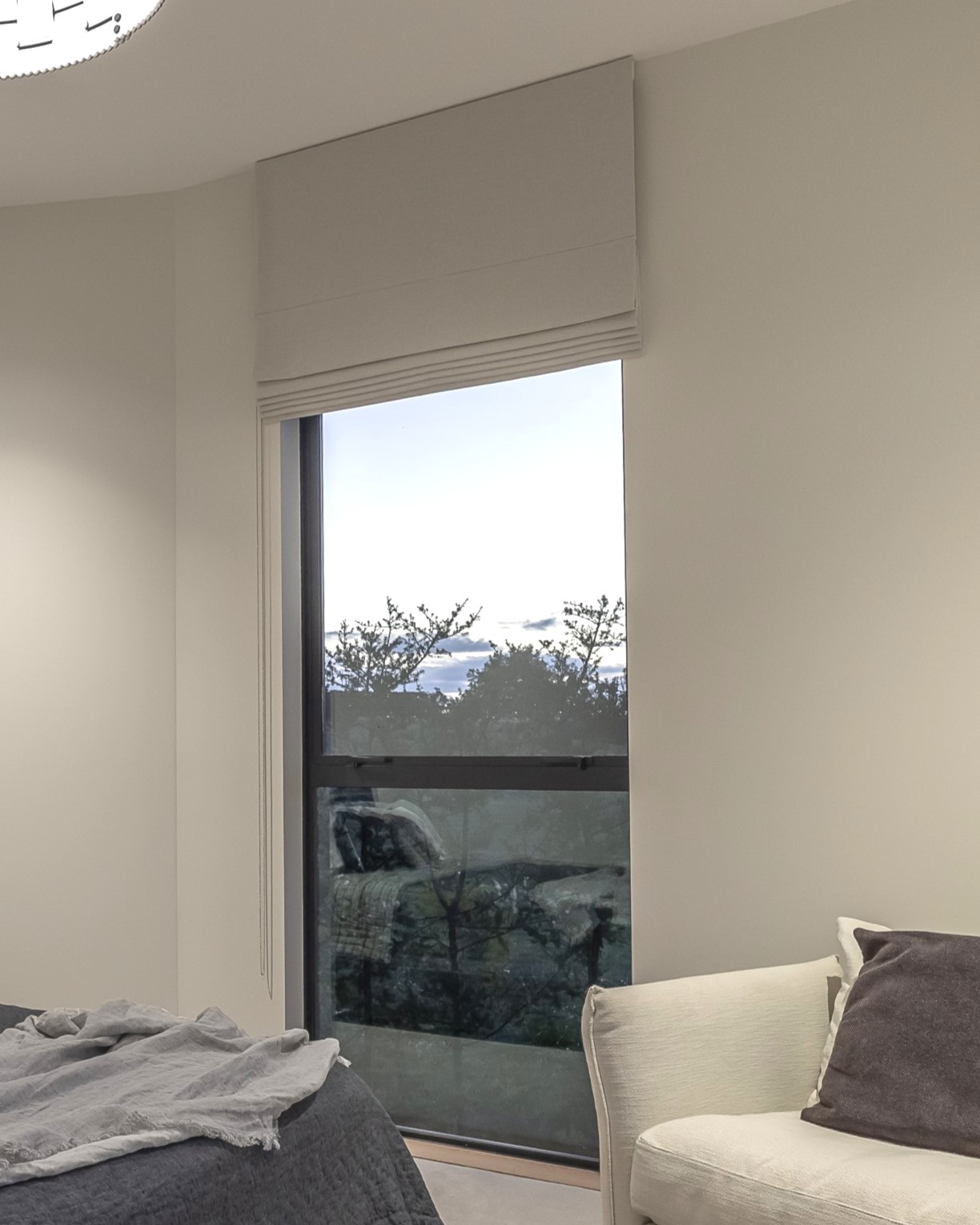
Roman blinds, roller blinds and curtains each offer different benefits, and the right choice depends on your space, lifestyle and the look you want to achieve.
Roller blinds provide a clean, streamlined appearance and are a popular choice for contemporary interiors. Limited range of fabric options (sunscreen, light-filtering or blockout) and generally neutral or dark shades. Explore Roller blinds at Lahood here
Roman blinds offer a softer, more textured finish, adding warmth and character while still offering space-saving functionality and working beautifully in traditional or modern homes depending on fabric and style chosen.
Curtains create a fuller, more luxurious feel, adding softness, insulation and a sense of scale to larger rooms. For a minimal architectural finish, both roller blinds and curtain tracks can be recessed into the ceiling, creating a clean look where the hardware is hidden from view. Explore curtains at Lahood here.
Many homes combine these options, using roman blinds or rollers for everyday light control and curtains to add warmth, softness and decorative impact.
|
Attribute |
Roman Blinds |
Roller Blinds |
Curtains |
|---|---|---|---|
|
Light control |
Excellent. Blockout or light filtering lining fitted behind the decorative fabric. Outside window frame best for darkness. |
Excellent. Sun screen to blockout fabric options available |
Excellent, depends on fabric and lining weight. Best results when fitted floor length and with ample space above/ beside frame. |
|
Space requirements |
Minimal, can be fitted inside the recess or outside if recess not deep enough |
Minimal, sits close to the glass; the track can also be recessed into the ceiling for a more minimal look |
Greater, needs wall space either side of the window for stacking curtain fabric; the track can also be recessed into the ceiling for a streamlined finish |
|
Best-suited rooms |
Kitchens, bathrooms, studies, hallways, above beds, and other space-saving areas |
Kitchens, bathrooms, home offices, high-glare rooms |
Living rooms, bedrooms, larger windows and doors |
|
Motorisation |
Yes, battery or hardwired |
Yes, battery or hardwired |
Yes, battery or hardwired |
To see and feel the fabrics for yourself and get personalised advice on the best roman blind style, fold and fitting for your home, visit Lahood's showroom at 104 Mount Eden Road, call 0800 LAHOOD, or book a complimentary in-home consultation here and ask about the current promotion offering 20% off the making of roman blinds in Lahood's Primelift range.
Roman blinds are fabric window coverings that fold into neat, even horizontal pleats when raised, rather than gathering at the sides like curtains. They combine the softness and fabric choice of curtains with the compact, tidy profile of a blind, can be fitted inside or outside the window recess depending on the room and can be motorised or manually operated.
Both Roman and roller blinds offer a clean, practical alternative to curtains, but they create quite different looks. Roman blinds are made from curtain-weight fabrics and fold into soft horizontal pleats when raised, adding texture, warmth and a more decorative feel to a room. Roller blinds use a single piece of fabric that rolls neatly around a tube, creating a streamlined, minimalist appearance. The right choice comes down to the style you want to achieve. Roman blinds are ideal when you want softness and character, while roller blinds are often chosen for a more contemporary, understated finish.
Yes. Motorised Roman blinds are an increasingly popular choice, particularly for larger windows, hard-to-reach areas or homes where convenience and child / pet safety is a priority. They can be fitted with battery-powered motors in existing homes or hardwired during a new build or renovation. With no cords or chains required, motorisation creates a clean finish and allows blinds to be operated at the touch of a button or even programmed to open and close automatically throughout the day.
Yes, but the size of the blind needs to be carefully considered when selecting the right operating system.
As a Roman blind becomes wider or taller, the fabric and lining become heavier to lift. Larger blinds often benefit from a geared chain system or motorisation, which makes everyday operation easier and helps protect the blind mechanism over time. For windows, wider than 2.5 / 3metres dividing the blind into two or more sections can create a more balanced appearance while improving ease of use.
Roman blinds work beautifully in bedrooms, particularly when paired with a quality blockout lining. They are perfect for windows above bed heads where there is limited space for curtain fabric. An outside-recess fit helps minimise light gaps around the edges, while a blockout lining provides better light control and privacy. The result is a softer alternative to traditional curtains while still creating a comfortable, restful environment for sleeping.
One of the biggest advantages of Roman blinds is the freedom of fabric choice. Almost any curtain-weight fabric can be made into a Roman blind, allowing you to introduce colour, texture and pattern in a more compact way. From contemporary and affordable options in Lahood’s Lifestlye Range through to premium New Zealand and International Design House collections, there are fabrics available to suit every style of home and budget.
Yes. Roman blinds are particularly practical in kitchens, bathrooms and other compact spaces because they sit neatly within the window area rather than requiring space for curtains to stack. For these rooms, an inside-recess fit is often preferred where the window depth allows, creating a tailored finish while keeping the space feeling open and uncluttered.